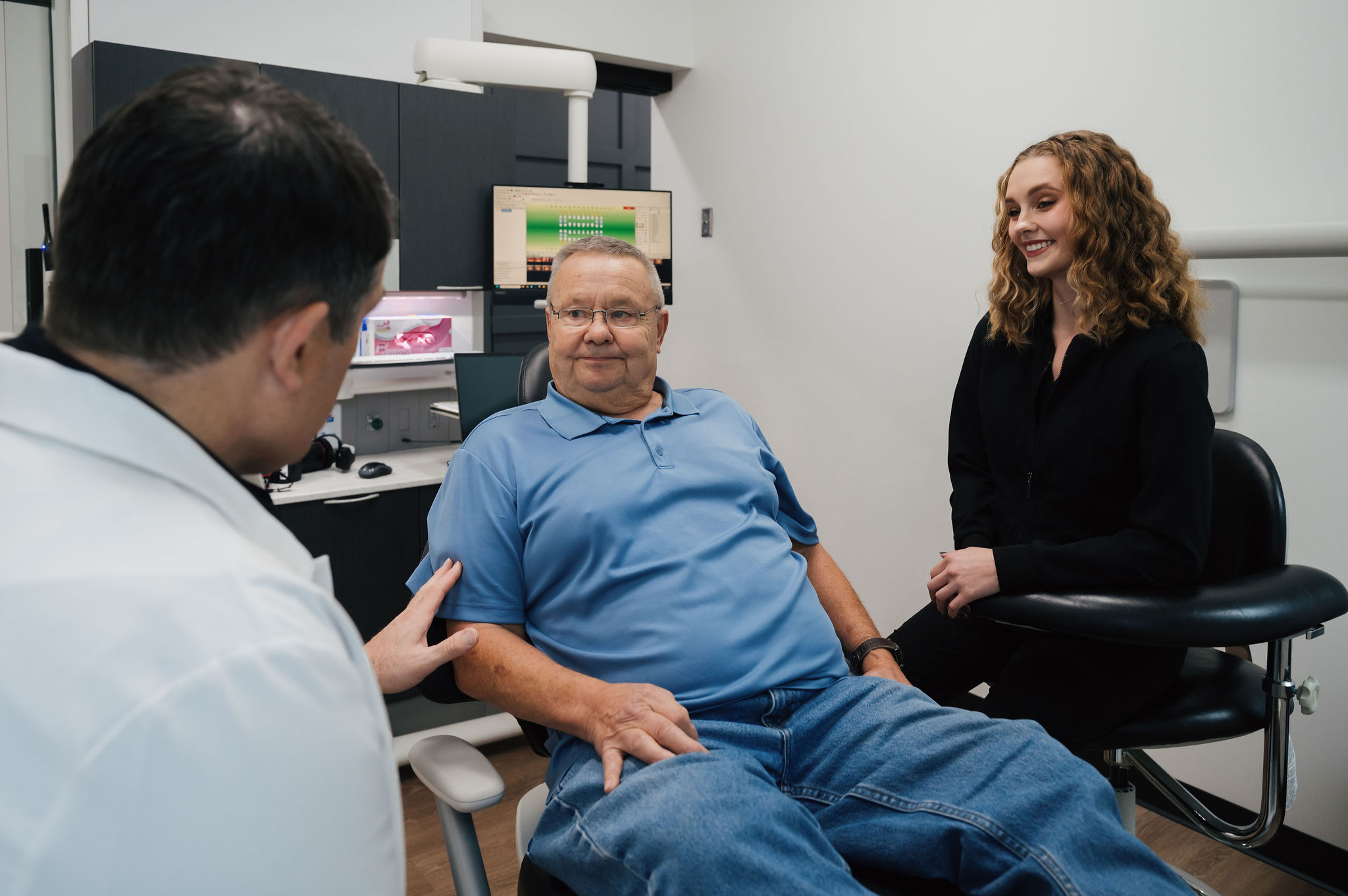
A Complete Guide to Sleep Apnea and Its Treatment Options
If you think you or someone you love might have sleep apnea, you're probably wondering where to start. Maybe you've been told you snore, wake up exhausted, or recently received a diagnosis and are sorting through treatment options. The good news is that sleep apnea is highly treatable, and today's options extend well beyond CPAP. For many people, a custom oral appliance fitted by a dentist offers a comfortable, effective way to improve breathing and sleep.
At Chesterfield Family Dentistry, our team believes understanding your options is the first step toward finding the right treatment. This guide explains what sleep apnea is, why it matters, how it's diagnosed, and where dental care fits into the bigger picture.
Continue reading to learn how oral appliance therapy compares with CPAP, who makes a good candidate, and what to expect if you're exploring treatment for the first time.
Quick Overview
- Sleep apnea is more than loud snoring. Left untreated, it can affect your energy, concentration, heart health, and overall quality of life.
- The right treatment depends on the severity of your condition. While CPAP remains the standard for many people, custom oral appliances can be an effective alternative for certain cases.
- Dentists play an important role in treating obstructive sleep apnea by providing oral appliance therapy, but diagnosis always begins with a physician and a sleep study.
- Understanding how sleep apnea develops, how it's evaluated, and what each treatment option offers will help you make confident, informed decisions about your care.
- Whether you're newly diagnosed or simply exploring your options, this guide will help you understand the full picture before taking the next step.
What Is Obstructive Sleep Apnea, and Why Does It Matter?
Obstructive sleep apnea, usually shortened to OSA, is a condition where your airway repeatedly collapses or gets blocked while you sleep. Each time it happens, your breathing pauses, your oxygen dips, and your brain rouses you just enough to reopen the airway and grab a breath. Then you drift back down and it happens again. In serious cases, that cycle can repeat dozens of times an hour, all night long, often without you remembering a single one of those wake-ups.
What makes apnea matter so much is that it isn't really a sleep problem; it's a whole-body problem that happens to surface at night. When your sleep gets fractured hundreds of times and your oxygen keeps dropping, the strain accumulates. Over the years, untreated obstructive sleep apnea is linked to:
- High blood pressure and extra stress on the heart
- A higher risk of heart attack, stroke, and irregular heart rhythms
- Type 2 diabetes and trouble managing blood sugar
- Daytime exhaustion that affects work, mood, and driving safety
- Memory trouble, irritability, and a foggy, never-quite-rested feeling
It's also more common than people assume, and it often goes years without a name because the symptoms get chalked up to stress, aging, or simply being busy and tired. So the takeaway is worth holding onto: it's serious, it's common, and it responds well to treatment once someone actually identifies it.
Our team takes the time to listen and explain, leaning on the same advanced digital imaging we use across our care to help see what's really going on.
What Causes Sleep Apnea: How Your Oral Anatomy and Airway Connect
Your mouth is more than where your teeth live. It's also the front gate to your airway, and the structures inside it have a lot to say about whether you breathe freely overnight.
Here's the basic picture. When you fall asleep, the muscles all over your body relax, including the ones in your throat, tongue, and jaw. For most people that causes no trouble. But if your lower jaw rests in a position that lets the tongue slide backward, or the soft tissue at the back of your throat tends to collapse, that relaxation can partly or fully close off the airway. Several anatomical traits raise the odds:
- A lower jaw that sits farther back than average
- A tongue that's large relative to the space available
- A narrow palate that limits how wide the airway can open
- A significant overbite that shifts the jaw's resting position
- Excess tissue in the throat, often tied to weight
This is exactly why a dentist is useful in the conversation. We spend years studying the jaw, the bite, the tongue, and the palate, and how all of those pieces work together. If a significant overbite or jaw position turns out to be part of the picture, orthodontic options like Invisalign can sometimes come into the discussion alongside airway-focused care. This connection between bite, jaw, and airway is also why TMD treatment often overlaps with the same evaluation.
One distinction matters because it changes the treatment path entirely. Obstructive apnea is mechanical: something physically blocks the airway. Central sleep apnea is a signaling problem where the brain doesn't reliably tell the breathing muscles to fire. Oral appliances and other airway-opening treatments address the obstructive type. Central apnea needs a different medical route, which is one more reason a proper diagnosis has to come first.
Recognizing the Signs: Symptoms and Risk Factors to Watch For
Apnea usually announces itself through symptoms long before anyone connects them to the airway. If a handful of these sound familiar, either in yourself or in someone whose sleep you've noticed, it's worth paying attention:
- Loud, persistent snoring that disrupts the whole household
- Gasping or choking sounds during sleep, usually heard by a partner
- Actual pauses in breathing that someone else witnesses
- Waking up with a dry mouth or sore throat
- Morning headaches with no obvious cause
- Feeling wiped out even after a full night in bed
- Trouble concentrating, low mood, or a short fuse during the day
The breathing-pause one tends to catch people off guard, because you can't observe it yourself. Often it's a bed partner who finally says something. Beyond the symptoms, certain things tilt the odds: carrying extra weight, being male, getting older, a thick neck or narrow airway, a family history of apnea, smoking, and alcohol close to bedtime. None of these guarantees you have apnea, but stacked together they're a reasonable nudge to get evaluated.
Here's a quieter clue most people don't expect: a routine dental visit can surface early hints. During an exam we sometimes notice worn-down tooth surfaces that point to nighttime grinding or chronic irritation at the back of the throat. None of that is a diagnosis on its own, but it's a solid reason to ask more questions and steer you toward the right next step.
How Sleep Apnea Is Diagnosed: Sleep Studies and Who Orders Them
This is the part people most often get tangled up on, so let's state it plainly: a dentist does not diagnose sleep apnea. A formal diagnosis comes from a sleep study, ordered and interpreted by a physician. Dentists treat apnea and can flag the warning signs, but the diagnosis itself lives on the medical side.
There are two main kinds of sleep study a doctor may order:
- In-lab polysomnography: an overnight stay at a sleep center, where technicians track your breathing, oxygen, heart rate, brain activity, and movement. It's the most thorough version and tends to be used for more complex cases.
- Home sleep test: a simplified study you do in your own bed with a small portable device. It's more convenient and works well for many straightforward cases of suspected obstructive apnea.
Your physician decides which fits based on your symptoms and health history. The study measures how many times an hour your breathing is interrupted, which determines whether you have apnea and how severe it is. That severity number then shapes which treatments make sense. Once a diagnosis is confirmed, we can talk through appliance therapy as one option, looking at how your sleep, jaw, and overall oral health fit together. If you suspect apnea but don't have a diagnosis yet, we're glad to point you toward the right referral so the testing happens first.
The Full Range of Sleep Apnea Treatments: From CPAP to Surgery
There's no single right treatment for everyone, which is actually good news: most people can find something they'll genuinely stick with. Here's the full field, including the options we don't provide ourselves, so you can see how the pieces relate before zeroing in on one.
CPAP therapy
CPAP, short for continuous positive airway pressure, is the established first-line treatment, especially for moderate-to-severe apnea. A small machine pushes a steady stream of air through a mask to hold your airway open all night. When it's tolerated, it's highly effective, which is why sleep physicians reach for it so often.
Oral appliance therapy
A custom dental device worn during sleep that repositions the lower jaw or tongue to keep the airway open. It's typically used for mild-to-moderate apnea, or for people who can't get along with CPAP. This is the option we focus on, and we dig into it just below. Our sleep apnea management page walks through what to expect.
Lifestyle changes
For some people, weight loss, cutting back on alcohol, quitting smoking, and treating nasal congestion meaningfully reduce apnea. These rarely solve moderate or severe cases on their own, but they often make every other treatment work better.
Positional therapy
A subset of people have apnea mainly when sleeping on their back. Devices or simple strategies that keep you on your side can help in those specific cases, usually alongside another treatment rather than instead of one.
Surgery
When a clear anatomical issue blocks the airway, surgical options exist, from removing excess throat tissue to procedures on the jaw and newer nerve-stimulation implants. Surgery is generally considered when other approaches haven't worked or aren't suitable, and it's handled by medical and surgical specialists, not a dental office.
Many successful plans combine an appliance or CPAP with lifestyle adjustments, coordinated between your dentist and your physician. If you're weighing an oral appliance, you can schedule a consultation or call us at 314-878-9808.
Oral Appliance Therapy: How a Dental Solution Works
An oral appliance is a custom-fitted device, a bit like a sturdy retainer or mouthguard, that you wear only while you sleep. Depending on your situation, it works by gently easing the lower jaw forward or holding the tongue in position, which keeps the airway open and cuts down the interruptions that make apnea so disruptive. No mask, no hose, no machine humming on the nightstand.
Getting fitted is more straightforward than most people expect, and it usually unfolds in stages:
- We take digital scans or impressions of your teeth and bite so the device matches your mouth precisely.
- Those records go to a dental lab, where your appliance is built to spec.
- You come back for a fitting, where we check comfort and positioning.
- Follow-up visits let us make small adjustments as your jaw adapts.
That last step matters. Dialing in the fit is an ongoing process, not a one-and-done handoff. A well-adjusted appliance feels comfortable, stays put through the night, and doesn't leave your jaw aching in the morning. It's also why the drugstore versions fall short: they're generic and can't account for your bite, your jaw, or the severity of your condition, while a custom device is made for you alone and tied to your formal apnea diagnosis.
Oral Appliance Therapy vs. CPAP: An Honest Comparison
If you've been diagnosed, or you're partway through getting evaluated, you've almost certainly hit this fork: CPAP machine or dental appliance? The right answer depends on your situation, but here's how they genuinely compare.
On raw effectiveness, CPAP has the edge, particularly for severe apnea. It reliably holds the airway open at any severity level, which is why it's the standard recommendation for serious cases. An oral appliance is highly effective for mild-to-moderate apnea, and effective enough for some moderate cases, but it isn't usually the first pick for the most severe ones.
Where the comparison flips is comfort and real-world use. CPAP only works on the nights you actually wear it, and a meaningful number of people struggle to:
- Tolerate a mask that feels claustrophobic, especially side sleepers
- Sleep through the machine's noise, or share a bed with it
- Travel with the bulk, the power needs, and the water it requires
- Keep using it at all, which leaves the apnea untreated
An oral appliance is quiet, slips into a travel bag, needs no power, and most people find it far easier to wear every single night. The best treatment is the one you'll actually use. The choice rests on your diagnosis, your severity, your sleep physician's input, and an honest read on what you'll really stick with. We use advanced digital diagnostics, including 3D CBCT imaging, to fit an appliance precisely, and we coordinate with your medical providers so whatever you land on is doing its job.
Who Is a Good Candidate for Oral Appliance Therapy?
Once the diagnosis and the options make sense, the natural next question is whether an appliance is right for you. As a quick recap, it tends to suit people with mild-to-moderate obstructive sleep apnea, as well as those who've found CPAP hard to live with. But candidacy isn't only about your apnea.
Because the device anchors to your teeth and shifts your jaw, your oral health carries real weight in the decision. A few things we look at closely:
- Existing TMJ or jaw-joint discomfort, which affects how well you'll tolerate a repositioning device
- The number and condition of your teeth, since the appliance needs stable anchor points
- Overall gum and tooth health, because any underlying issues are sorted out first
Treat this as a starting framework, not a checklist for ruling yourself in or out. The only reliable way to know is to sit down with a dentist who understands both the dental and the sleep side, where it all gets weighed together.
What to Expect: The Treatment Process at Chesterfield Family Dentistry
When you come in, you're not walking into a rushed visit with a one-size-fits-all answer waiting at the end. We build the process around understanding your specific situation first.
If you already have a sleep study on file, bring it; we'll go through the results with you and explain what they mean in the context of an appliance. If you haven't been diagnosed yet, that's fine too. We work closely with sleep physicians and can help coordinate the testing so nothing slips through the cracks between providers. A first appointment usually covers:
- A thorough look at your sleep study results, or a referral pathway if testing hasn't happened yet
- A clinical evaluation of your jaw, bite, and oral structures to confirm you're a candidate, often informed by our TMD evaluation when jaw tension is part of the picture
- Digital scans or impressions to capture the exact fit your appliance needs
- A clear walkthrough of your options so you understand what you're choosing and why
From there, the relationship keeps going. Your device may need adjusting as your jaw adapts, and we monitor your progress to make sure the treatment is genuinely working. Apnea care rewards patience and follow-through, so we stay with you through the adjustments rather than handing over a device and waving goodbye. If you'd like to start, you can schedule a consultation or call us at 314-878-9808 to talk through your situation with our team.
Living With Your Appliance: Adjustment, Aftercare, and Long-Term Use
Most people settle into wearing an appliance within a few weeks. The first several nights can feel odd, and a little jaw or tooth tenderness in the morning is normal early on, easing as your muscles adjust. If something stays uncomfortable, that's exactly what follow-up visits are for; small tweaks make a big difference.
Day-to-day care is simple:
- Rinse and gently brush the appliance each morning to keep buildup and odor down
- Let it dry fully before storing it in its case
- Keep up your normal brushing and flossing, since healthy teeth and gums are what the device relies on
- Bring it to your regular dental visits so we can check both the device and how your bite is holding up
A well-made appliance, cared for properly, typically lasts several years before it needs replacing, though that shifts with how much you grind and how your mouth changes over time. Jaw position and bite can drift with long-term wear, so periodic check-ins let us catch anything early. If your apnea or your health changes, the plan can change along with it. Our team at Chesterfield Family Dentistry is here to help.
Cost, Insurance, and What Sleep Apnea Treatment Involves Financially
Cost is a fair thing to want clarity on before you commit, and the honest reality is that it varies with your specific situation, the type of appliance, and your coverage. We review the full cost with you during your consultation and walk through the payment options available so there are no surprises later.
One wrinkle worth knowing: because sleep apnea is a medical diagnosis, oral appliance therapy is often billed through medical insurance rather than dental, even though a dentist provides it. Coverage hinges on your plan, your documented diagnosis, and the medical necessity established by your sleep study. We file with almost all PPO plans and are in network with Delta Premier, and our team can help you understand how your coverage is likely to apply before you decide.
It's also worth weighing cost against value. Untreated apnea carries its own long-term price in health and quality of life, so the real question isn't only what a treatment costs up front, but what restful sleep is worth to you.
Ready to Find the Right Sleep Apnea Solution?
Living with sleep apnea or chronic snoring can take a toll on far more than your nights. It can affect your energy, focus, long-term health, and the people you share your home with. The good news is that effective treatment isn't one-size-fits-all, and understanding your options is the first step toward sleeping better.
Whether you've already been diagnosed, have struggled with CPAP, or are just beginning to wonder whether sleep apnea could explain your symptoms, we're here to help. At Chesterfield Family Dentistry, our team takes the time to understand your needs, answer your questions, and determine whether oral appliance therapy is the right fit as part of your overall care.
When you're ready to take the next step, we'd love to meet you. Call us at (314) 878-9808 or contact our team to schedule a consultation and learn how we can help you achieve healthier, more restful sleep.

We can’t wait to meet you
Call 314-878-9808 or request an appointment online to set up your first visit. We’ll be in touch soon.