Dental Implants in Chesterfield, MO: A Complete Guide to Replacing Missing Teeth
If you're missing a tooth, or you've been told one can't be saved, you're probably wondering what comes next. For many adults, dental implants are the most durable and natural-feeling way to replace a missing tooth. Unlike bridges or dentures, an implant replaces the tooth root as well as the visible tooth, creating a stable foundation that looks, feels, and functions much like the one you lost.
That doesn't mean implants are the right choice for everyone. The best solution depends on your oral health, bone structure, lifestyle, and long-term goals. Dr. Silva and the team at Chesterfield Family Dentistry created this guide to help you understand your options, what the implant process actually involves, and what you can realistically expect from treatment. Whether you're replacing a single tooth or exploring full-arch solutions, our goal is to help you make an informed decision with confidence.
Continue reading to learn how dental implants work, who they're best suited for, how they compare with bridges and dentures, and what the treatment journey looks like from consultation through your final restoration.
Quick Overview
- Dental implants replace both the root and crown of a missing tooth, making them the most natural-feeling tooth replacement available today.
- Most healthy adults are candidates, and even if you've experienced bone loss or have been told you aren't eligible, additional treatment may still make implants possible.
- The process takes place over several months, allowing the implant to heal securely into the jawbone before the final restoration is placed.
- With good home care and regular dental visits, the implant itself can last for decades, often a lifetime.
Why Teeth Are Lost and Why Replacement Matters
Teeth can be lost for many reasons, including deep decay, advanced gum disease, injury, a cracked tooth, or a root canal that was not successful. Sometimes, it's simply the result of several dental concerns adding up over time.
Whatever brought you to this point, you won't be judged for where you are in your dental journey. At Chesterfield Family Dentistry, we believe you deserve to feel comfortable asking questions and understanding your choices. Dr. Silva and our team will meet you where you are, take the time to understand your goals and concerns, and help you explore the options available to you. Our role is to give you clear information so you can make a decision that feels right for you, without judgment or pressure.
What surprises a lot of people is what happens after a tooth is gone. The gap itself is the obvious part. The quieter changes happen over time:
- Bone loss: A tooth root stimulates the jawbone when you chew. After a tooth is lost, the bone in that area can gradually shrink. Dental implants may be one option to help preserve bone because the implant post replaces the function of the tooth root.
- Shifting teeth: Neighboring teeth can gradually move into an empty space, while the opposing tooth may begin to over-erupt. Over time, these changes can affect how your teeth come together.
- Chewing and speech changes: Depending on which tooth is missing, you may notice changes in how you chew certain foods or, in some cases, how you pronounce certain sounds.
- Confidence: A missing tooth can also affect how comfortable you feel smiling, speaking, or eating around other people. That's a valid part of the decision, too.
The important thing is that you have options. Replacing a missing tooth may involve a dental implant, bridge, denture, or another approach depending on your oral health, goals, and circumstances. Dr. Silva will explain what each option can offer, answer your questions, and help you understand the benefits and considerations before you decide.
You don't have to know what you want before you come in. You just need to be ready to have the conversation. We'll meet you where you are and help you take the next step with information you can feel confident about.
How Dental Implants Actually Work
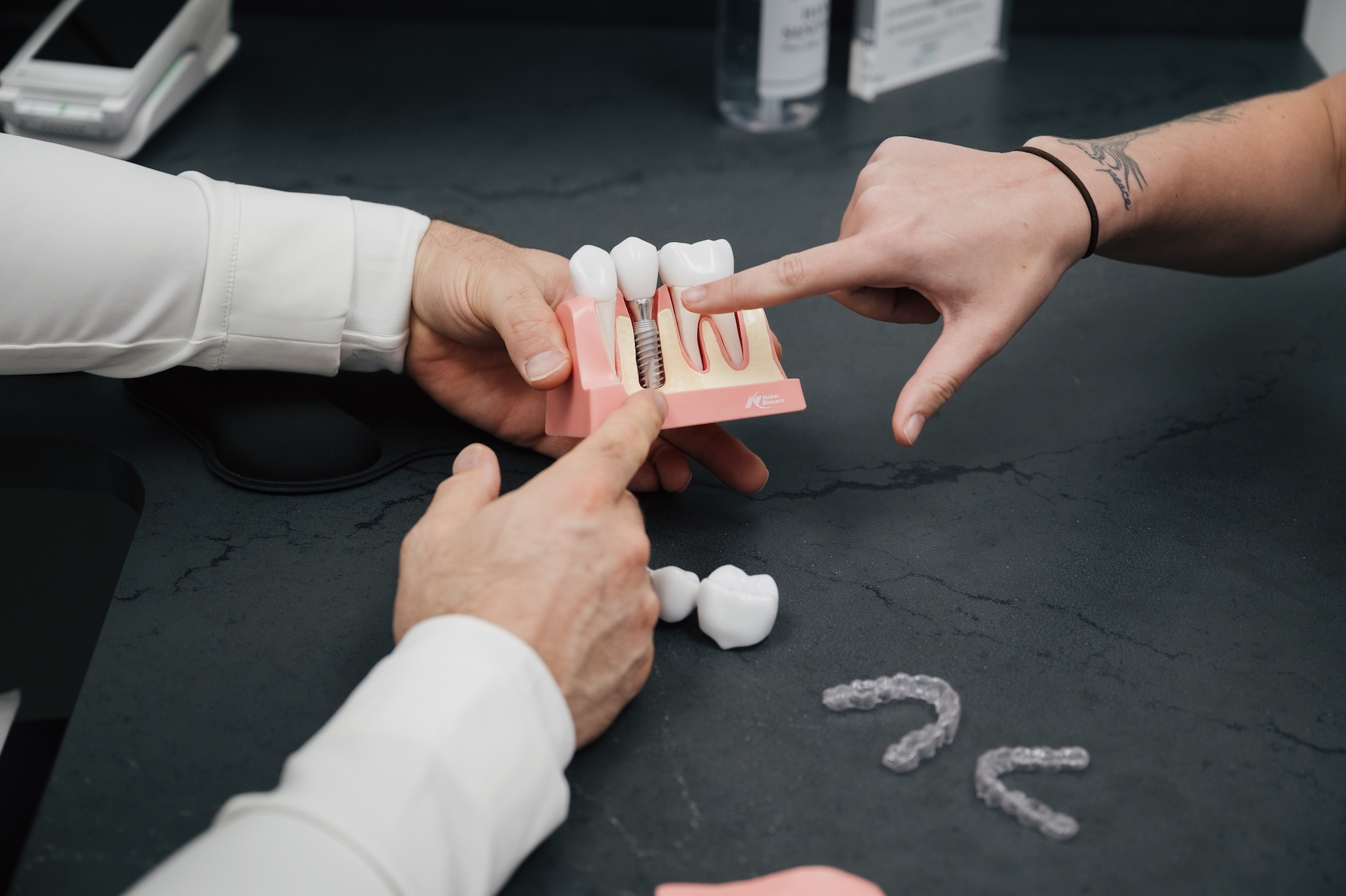
It helps to understand what's going on beneath the surface, because an implant isn't really a single object. It's a small structural system, and that's what makes it behave so differently from a denture or a bridge.
An implant has three parts that work together:
- The post: a small titanium screw placed into the jawbone, doing the job your natural tooth root used to do
- The abutment: a connector that attaches to the top of the post once healing is done, giving the crown something solid to sit on
- The crown: the visible, tooth-shaped cap, custom-made to match the size, shape, and color of the teeth around it. At our practice, these are often created using same-day crown technology for a precise fit
What really matters is what happens after the post goes in. Over the following weeks and months, your jawbone gradually grows around and bonds to the titanium surface. That process is called osseointegration, and it's why an implant feels so much like a natural tooth. The post stops being something sitting in your jaw and becomes part of it.
Compare that to the alternatives and the difference is clear. A denture rests on top of the gums, which is why it can move or need adhesive. A bridge leans on the two teeth beside the gap, which have to be filed down to hold it. An implant carries the load on its own, the way a real root does. If you're missing several teeth, our implant-supported solutions can apply the same principle on a larger scale.
The Implant Process: What Happens from Consultation to Final Crown
One of the most common things we hear is that people wish someone had simply walked them through the process before they committed. It does involve several stages, but each one is manageable once you know what it's for.
It starts with a consultation and imaging
At Chesterfield Family Dentistry, we use advanced technology to get a detailed view of your teeth, gums, and jaw before recommending a treatment plan. Our 3D imaging technology helps Dr. Silva evaluate the structures that aren't visible during a routine examination, giving our team a more complete picture of your oral health and the available treatment options.
Every person's situation is different. Some people may have the bone support and gum health needed to move forward with treatment, while others may benefit from addressing certain concerns first. Our goal is to use the information from your exam and imaging to give you a clear understanding of where you are starting, what options are available, and what each step could involve.
Preparatory work, if you need it
Depending on your situation, the groundwork might include:
- Removing the damaged tooth, if it's still in place
- Bone grafting, if there isn't enough healthy bone to anchor the post
- Treating gum disease before placement
If grafting is needed, it adds healing time before the next phase. That's not a setback; it's building a stable foundation, and it's worth doing properly.
Placing the post and healing
Once your jaw is ready, the titanium post is placed where the root used to be. Then comes osseointegration, the healing period where bone fuses to the post. In straightforward cases this takes a few months; when grafting was involved, the full timeline runs longer.
The abutment and final crown
After healing is complete, the abutment is attached, and your custom crown goes on top, shaped and shaded to blend with the teeth around it. We coordinate every phase so you always know where you are and what's coming next. You're never left guessing.
Are You a Good Candidate for Dental Implants?
This is one of the first questions people bring to us, and the honest answer is that most people qualify, or can get there with a little preparation. The foundation of a successful implant is a healthy mouth and enough jawbone to anchor the post. Beyond that, a few things come into play.
- Jawbone density: The post needs solid bone to fuse with. If you've been missing teeth for a while, some bone loss is common, but it rarely rules you out on its own. Bone grafting can rebuild what's needed before placement.
- Gum health: Active gum disease gets treated with periodontal treatment before implants go in. Healthy gum tissue is part of what keeps an implant stable long term.
- Overall health: Some unmanaged conditions, like uncontrolled diabetes, can slow healing. Well-managed, those same conditions often still leave implants very much on the table.
- Smoking: Smoking slows healing and raises the risk of failure. We'll talk about it candidly, because it matters, but it doesn't automatically close the door.
- Age: Implants go in adults whose jaw has finished growing, usually late teens and up.
If you've already talked yourself out of implants because of bone loss or a health issue, it's worth a real conversation before you decide. Preparatory treatments have made implants possible for plenty of people who would have been turned away years ago. You may still qualify even if a previous dentist said otherwise, and we'll give you a straight read on where you actually stand at your dental implant consultation.
Recovery, Aftercare, and Keeping Implants Healthy for Life
Recovery is usually gentler than people expect. After a post is placed, most patients manage any soreness with over-the-counter pain relief and are back to normal activities fairly quickly. You'll stick to softer foods for a little while and keep the area clean as it heals. The longest part isn't discomfort; it's simply giving osseointegration the months it needs to do its work quietly beneath the surface.
Once your final crown is in, caring for an implant is refreshingly ordinary:
- Brush twice a day and floss like you would around a natural tooth
- Keep up with regular cleanings and checkups so we can keep an eye on the implant and the gum around it
- If you grind your teeth, a nightguard helps protect your investment
The crown won't get a cavity, but the gum and bone supporting the implant still need healthy habits to stay strong. Treat the area well and an implant is built to last a very long time, often decades. The crown on top may eventually show wear and need replacing, much like any restoration, but the post itself is designed to be permanent. That durability is a big part of why so many patients feel the investment pays off.
The Full Range of Tooth-Replacement Options: Implants, Bridges, and Dentures
Implants get a lot of attention, and for good reason, but bridges and dentures are well-established options that work beautifully for many people. The right choice depends on your mouth, your priorities, and your budget. When a tooth is missing, you generally have three paths:
- A single-tooth implant replaces both the root and the crown as a standalone restoration, without touching the neighboring teeth.
- A fixed bridge suspends an artificial tooth between two crowns placed over the adjacent teeth.
- A removable denture replaces one or more teeth with a prosthetic you take out to clean.
Here's how they tend to differ on the things people actually care about. On longevity, implants have the longest track record when they're well placed and maintained; bridges and dentures usually need adjustment or replacement over the years. On maintenance, an implant is cleaned like a natural tooth, a bridge needs special floss threaders to get underneath it, and dentures come out for cleaning. On daily function, implants feel the most like real teeth because they're anchored in bone, while some denture wearers notice movement or have to avoid certain foods.
One real advantage sets implants apart: bone preservation. Because the post stimulates the jaw the way a root does, it helps hold the bone structure in place. Bridges and dentures don't provide that stimulation, so the bone underneath can continue to shrink. For patients missing most or all of their teeth, implant-supported solutions like All-On-Four can offer the same bone-preserving benefit across a full arch.
None of that makes bridges or dentures the wrong call. They're often the better fit when cost, oral health, or the number of missing teeth points in that direction. The honest answer comes from looking at your specific mouth, not from a ranking, because the right choice for your neighbor may be the wrong one for you. The best next step is to schedule a consultation with our Chesterfield team, where Dr. Silva can review your options and help you decide what fits.
Replacing Multiple Teeth or a Full Arch: All-on-4 and Implant-Supported Options
Single implants are ideal for one gap, but what about more extensive loss? For patients missing most or all of the teeth on an arch, there are implant-based solutions designed for exactly that, and they work quite differently from replacing teeth one at a time.
The core idea is efficient: instead of one implant per tooth, a small number of strategically placed posts can anchor a full arch of teeth. Because the posts are angled to make the most of the bone you still have, this approach is often accessible even to patients who've experienced significant bone loss.
All-on-4 is the best-known version of this. In broad terms, four implant posts support a complete, fixed set of teeth. For someone who's been wrestling with loose dentures or has stopped smiling for years, the change can be genuinely life-altering. A few things worth knowing:
- It removes the fit and slippage headaches of traditional removable dentures
- The result looks and chews far more like natural teeth
- It's sometimes possible even for people previously told they weren't implant candidates
Implant-supported dentures are a related middle ground: a removable denture that snaps onto a few implants for far more stability than a conventional one. We handle the full range of complexity here, from a single dental implant to a complete arch, and we'll help you understand which version fits your situation.
Understanding the Cost of Dental Implants in Chesterfield
Cost is a common question when considering dental implants, and it's worth understanding what goes into the investment. Implant treatment isn't a one-size-fits-all procedure. The total cost depends on factors such as:
- How many teeth you're replacing
- Whether you need preparatory treatment first
- The materials selected for your crown, bridge, or other restoration
Rather than giving you a number without context, we provide a clear breakdown during your consultation so you understand what's involved before making a decision.
It's also helpful to consider implants as a long-term investment in your oral health and function. While the initial cost may be higher than some other tooth replacement options, implants are designed to provide durable, long-term support with proper care.
At Chesterfield Family Dentistry, Dr. Silva and our team will take the time to explain your options, discuss the factors that affect your treatment, and make sure you have the information you need to make a decision that feels right for you.
How Chesterfield Family Dentistry Approaches Implant Care
When you reach Chesterfield Family Dentistry with any treatment in mind, we take time to understand what you've been living with, what you'd like to change, and the questions that have been sitting in the back of your mind. Dr. Silva's focus on cosmetic and implant dentistry, paired with our advanced technology, lets us plan precisely before anything is recommended.
From there, we build a plan that fits you specifically. Two people with a single missing tooth can need very different things, so we tailor each plan to the bone, health, and goals in front of us. We explain each step in plain language: the timeline, what each appointment involves, and what to expect along the way.
The thing patients tell us matters most is continuity. You're not passed off to a stranger partway through. The team guiding you through your implant care is the same team you already know from your regular visits, and that familiarity makes a real difference over a treatment that unfolds across several months.
One rule has shaped this practice since the beginning: never trade a long-term relationship with a patient for a short-term profit. That's the spirit we bring to every implant plan, for patients across Chesterfield, the Chesterfield Valley, and the wider St. Louis area.
Ready to Find Out If Dental Implants Are Right for You?
The best way to know whether implants make sense for you isn't a quiz or a checklist. It's a conversation with someone who can look at your bone density, your oral health history, and what you're hoping to achieve, then give you a real answer.
There's no pressure and no commitment in asking questions. At your visit, the team will review your bone density and jaw structure, assess your overall oral health and anything that might affect treatment, lay out your options clearly, and answer whatever questions you bring through the door.
If you've been turning this over for a while, this is a good next step. You can also get in touch with our Chesterfield team or call us at (314) 878-9808 and we'll find a time that works for you.

We can’t wait to meet you
Call 314-878-9808 or request an appointment online to set up your first visit. We’ll be in touch soon.